
Guide · Plasterboarding
How to plasterboard a wall, from bare wall to board
A how-to companion for plasterboarding a wall yourself. If you would rather have the job done, see our plasterboarding service.
- Plastering and rendering from one team
- Within 50 miles of Beccles, across Norfolk and Suffolk
“…The site was left clean and tidy…”
Get a free quote
Tell us about the job. Photos help us quote faster — you can attach them in a follow-up if the form has no upload.
“Absolutely fantastic all round from beginning to end. Quality of work is 1st class.”
“…couldn't be happier! From start to finish, the service was professional, reliable, and completed to a very high standard.”
We only use your details to reply about your quote. Privacy policy
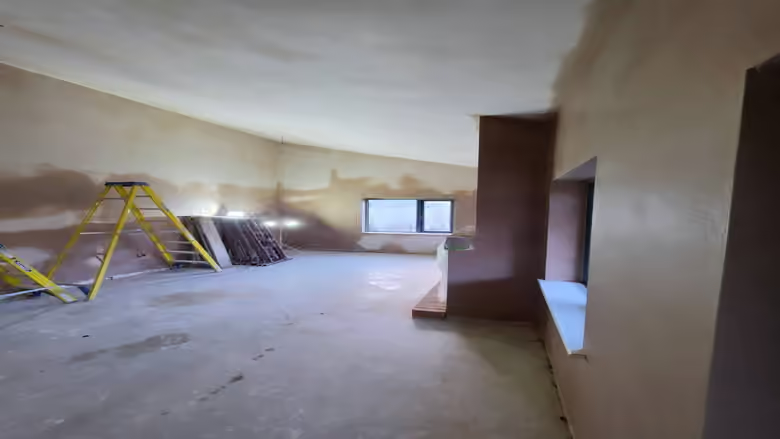
Photo: plastered sloping ceiling meeting a boxed-in angled wall, November 2026
Step by step
How to plasterboard a wall, from bare wall to board
Always follow the product maker's instructions.
Check the wall
Decide how the boards will be fixed: screwed to timber or metal studs, to battens, or bonded to masonry with adhesive dabs.
Measure and cut
Measure each board, allowing a small gap at the floor, and cut cleanly with a knife or saw.
Fix the boards
Fix boards with the right screws or adhesive, staggering the joints and keeping edges tight.
Treat the joints
Tape the joints and either fill and sand them, or skim the whole wall for a smooth finish.
Finish
Once dry, the wall is ready for a mist coat and decorating.
Questions
Common questions
Which plasterboard do I need?
It depends on the room: standard, moisture-resistant, fire-rated and insulated boards each have their use. Check the manufacturer guidance for your room.
Should I skim new plasterboard?
A skim gives the smoothest result and hides the joints; tape-and-joint is the alternative.
Our work
What a finished job looks like
Our own photos. Tap to enlarge.
Rather we did it?
Send the form with a few details and photos. It takes about a minute.